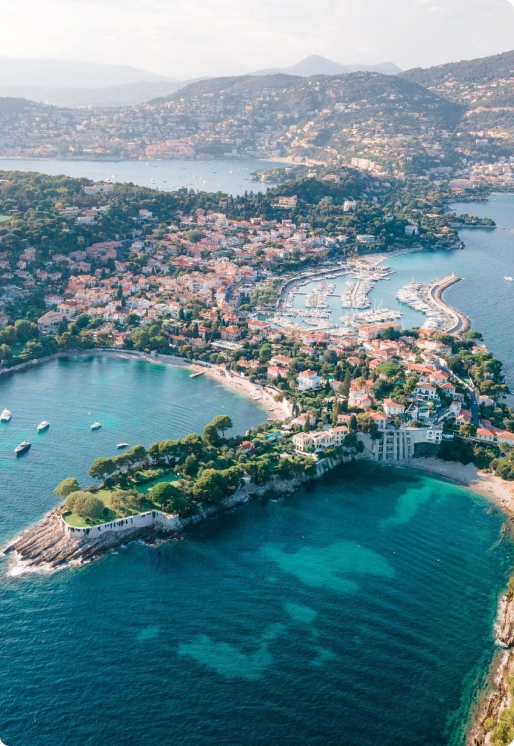
Cannes gained international fame in the 20th century thanks to the Cannes Film Festival. Gala evenings, regattas and festivals increasingly drew attention to the city, where giant superyachts reigned supreme and the motto seemed to be “Life is a festival.” Today, visitors come to Cannes to admire film stars and stroll along the Croisette, lined with numerous hotels.
 At the premiere of “Leviathan” in Cannes
Cannes — a city of events
Cannes is a capital of international film festivals, with the Cannes Film Festival held here since 1946, and it is also a major destination for international congresses. In terms of the number of international events hosted, Cannes is rivalled perhaps only by Paris. The Palais des Festivals, opened in 1982 and nicknamed “the bunker” by locals, is the city’s best-known venue: it includes 17 conference rooms and 17,000 square metres of exhibition space. During the Festival, film stars walk up its famous steps as microphones are extended towards them and dozens of cameras capture the scene — an unmistakable atmosphere.
In addition to the world-famous Cannes Film Festival, the city also hosts events such as the international music industry market MIDEM, the international television and audiovisual content market MIPTV, the international retail property exhibition MAPIC, the Cannes Lions International Festival of Creativity and, of course, the International Pyrotechnic Festival.
 The famous Cannes Film Festival staircase
La Croisette
The city enjoys a particularly picturesque setting along the bay. Stretching along the seafront from the Palais des Festivals to Palm Beach Casino is Cannes’ palm-lined “Broadway” — Boulevard de la Croisette. The boulevard owes its name to a cross (“croisette” meaning a small cross) that once stood here for pilgrims travelling to Lérins Abbey. The famous Majestic, Carlton and Martinez hotels are located here and welcome celebrities during the Festival. The boulevard begins at Place du Général de Gaulle, where the Palais des Festivals et des Congrès is also located. Directly in front of the Palais is the famous Walk of Stars, where internationally renowned actors and cinema personalities leave their handprints.
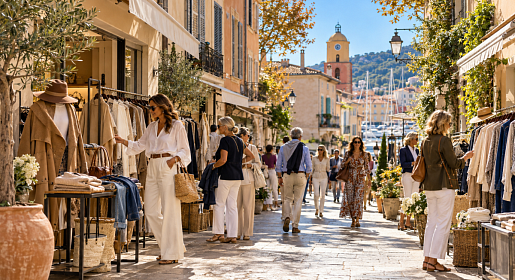
On the other side of the boulevard stretch golden beaches with sand brought in especially for them. Unfortunately, access to the sea is not free everywhere, as many beaches are privately operated. At the far end of the promenade there is a public beach where visitors can swim and sunbathe free of charge. Running parallel to the Croisette is Rue d’Antibes, with elegant boutiques and jewellery shops, while pétanque is played around Place de l’Étang.
 La Croisette
What to see in Cannes
Cannes is not only about prestigious hotels and glamorous beaches. The city also offers numerous cultural and historical attractions worth discovering.
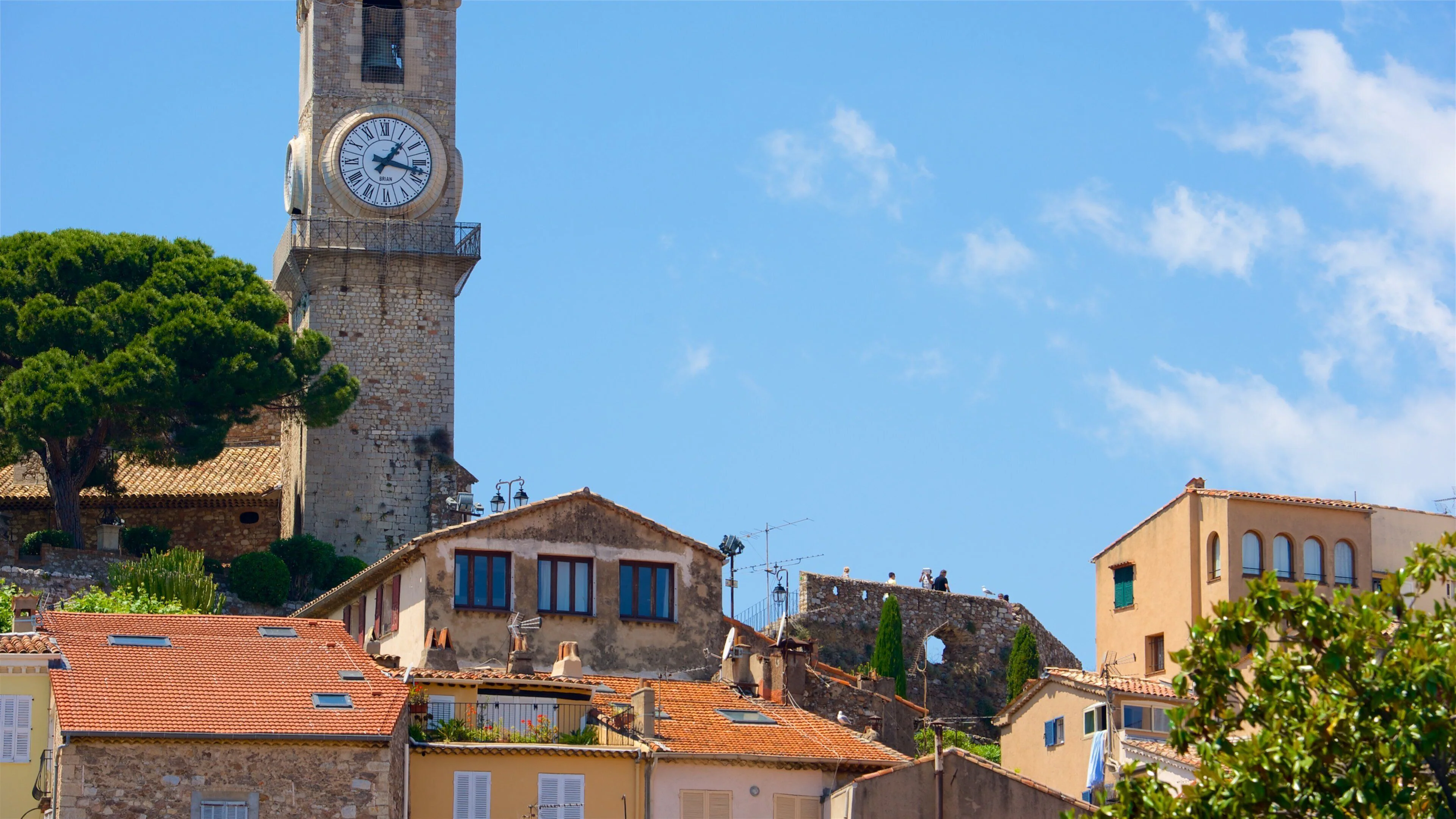
It is worth visiting the historic Le Suquet district, climbing the slopes of Mont Cheval. At the top stands the Church of Our Lady. From the viewpoint, there are panoramic views over the bay, the city and the Lérins Islands. Archaeological finds, antique musical instruments and paintings depicting the French Riviera can be seen in the museum housed in the Château du Suquet. Several rooms are devoted to the Middle East, Africa, Oceania and Asia.
Art lovers will appreciate the stained-glass windows and Murano enamel mosaics of the Chapelle Tobiasse. The ground floor of La Malmaison pavilion regularly hosts exhibitions dedicated to contemporary art.
It is also worth visiting the Notre-Dame-de-l’Espérance church and the Sainte-Anne church, where various exhibitions are often held.
We also recommend walking along Allées de la Liberté towards the Old Port, where the monument to Lord Brougham stands, while the 19th-century Town Hall can be seen on Quai Saint-Pierre.
 Notre-Dame-de-l’Espérance
Families with children can head to Port Canto, entering through the park with its playgrounds and carousels. Both children and adults may also enjoy the sightseeing tourist train, which can be boarded near the Palais des Festivals. It takes passengers along the seafront, Rue d’Antibes and up towards a panoramic viewpoint.
A visit to the islands of Saint-Honorat and Sainte-Marguerite can also be interesting for the whole family. On Sainte-Marguerite, Richelieu built a fortress where the mysterious prisoner associated with Dumas’ “Man in the Iron Mask” was later held. The fort on Sainte-Marguerite houses the Musée de la Mer, where visitors can learn about the Mediterranean from ancient times to the present day. Archaeology enthusiasts may also be interested in the Musée de la Castre. Located in the historic castle of old Cannes, it contains collections devoted to Mediterranean archaeology. Exhibits include objects linked to the civilisations of Ancient Egypt, Greece, the Roman Empire, Iran and Syria, Mesopotamia and Cyprus. Art lovers can also discover works by Orientalist and Provençal artists in a dedicated collection.
Compared with Nice, Cannes does not have a particularly large number of museums, but there are numerous art galleries. Returning to the main shopping street, Rue d’Antibes, you can visit Galerie de Cannes, where Provençal landscapes are presented through the work of contemporary artists. Nearby on the same street is the Alexandre Leadouze gallery, another space devoted to contemporary art, displaying new trends in painting as well as modern techniques. Espace Miramar on Rue Pasteur continues this sequence of contemporary art venues. Admission is free, and the gallery presents works in a variety of styles by local artists.
The cultural programme can be completed with a visit to Saint-Honorat Island, where it is worth spending at least several hours, if not the entire day. It is particularly suitable for a family outing. The journey begins in the Port of Cannes, from where a red boat departs for the island. Saint-Honorat is home to an ancient monastery where the monks cultivate grapes and olives and produce wine. Around 30,000 bottles are produced annually. The winemaking tradition is nearly as old as the monastery itself and dates back to the early history of the abbey. At the end of the 11th century, a five-storey fortified monastery was built to protect the island from attacks from the sea. It contained a refectory, library and chapel. Around the monastery are seven chapels dating from the 11th to the 17th centuries, although one of them, the Chapel of Saint Michael the Archangel, was destroyed. The monastery was closed in 1789 and its main building was demolished. Children may particularly enjoy exploring the winding paths among the historic walls. In 1859, Cistercian monks began restoring the monastery and re-establishing monastic life on the island. A new building was erected in Romanesque style, while only the towers and inner courtyard of the earlier structures were preserved. Visitors can access the abbey church, cloister and a small museum containing medieval manuscripts. Much of the eastern half of the island is closed to visitors and is known as the “zone of silence.”
After walking along the picturesque paths, you can stop at La Tonnelle, a restaurant located directly by the sea. Alongside Mediterranean cuisine, it serves locally produced wine. Family or business lunches can also be organised by reservation, and the venue may be privately booked. Before travelling, it is advisable to check boat departure times and the restaurant’s current opening schedule.
 Saint-Honorat Island
Back on the mainland, do not miss the shops along Rue d’Antibes, the city’s main shopping street. For residents of large cities accustomed to shopping in huge malls, a walk along this street offers a more relaxed shopping experience. On the world-famous Croisette, meanwhile, visitors will find a succession of boutiques from major international brands including Dior, Chanel, Lacroix, Gucci, Chopard and Louis Vuitton.